បន្ទប់ខ្សឹប (២០២៦)
ដោយ វុធ លីណូ ជាមួយប្រជាជនប៊ូសាន
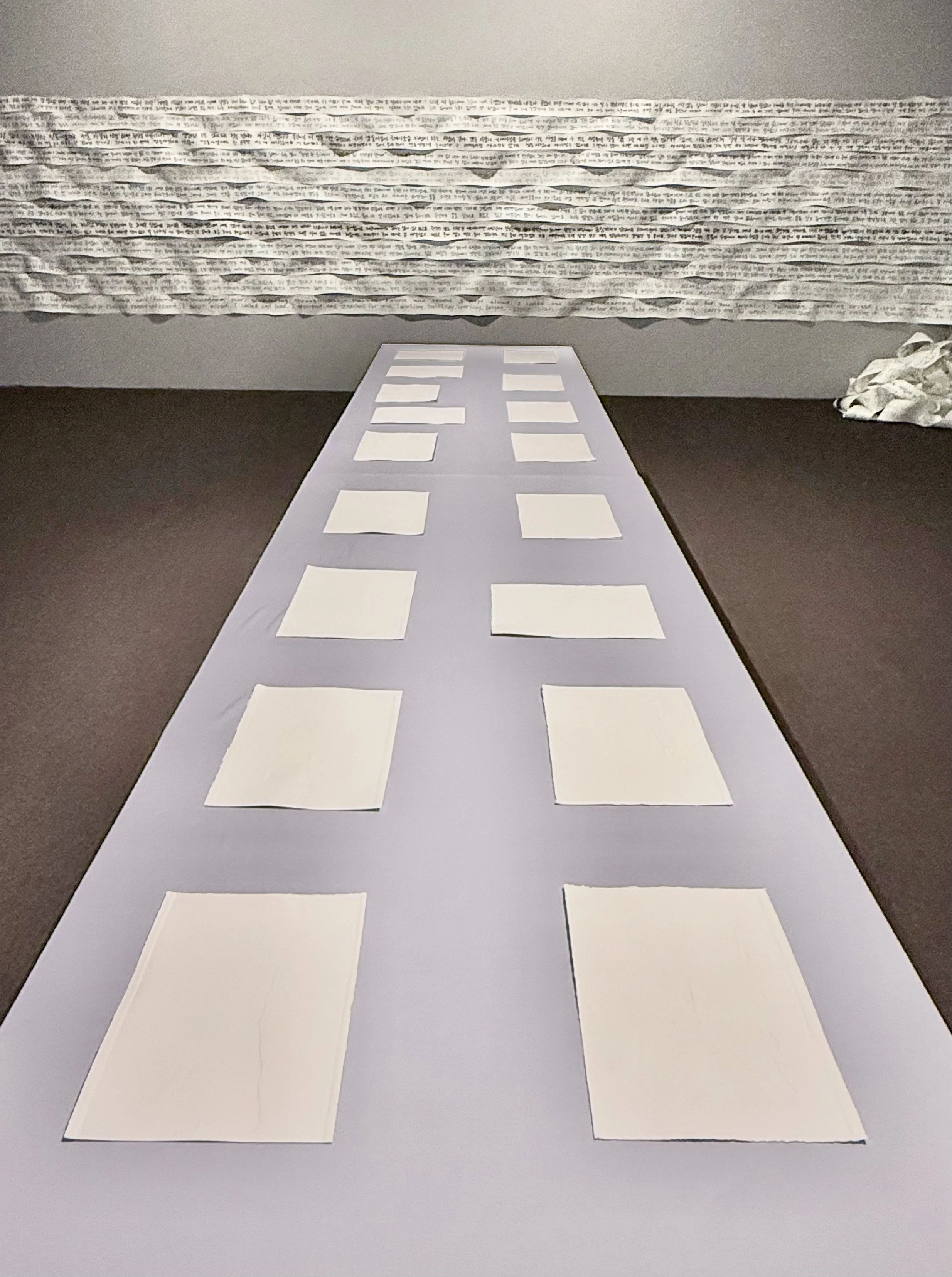
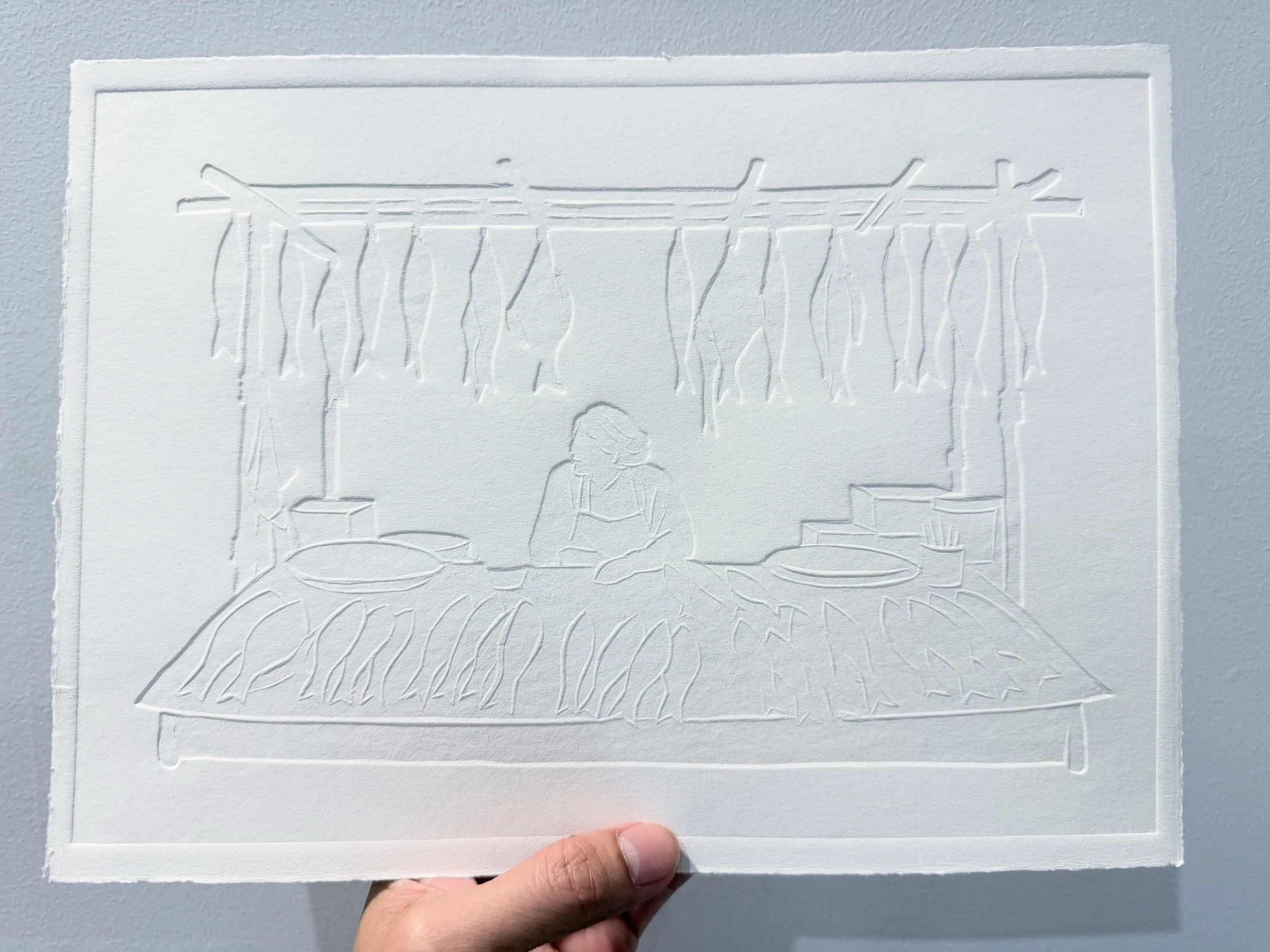
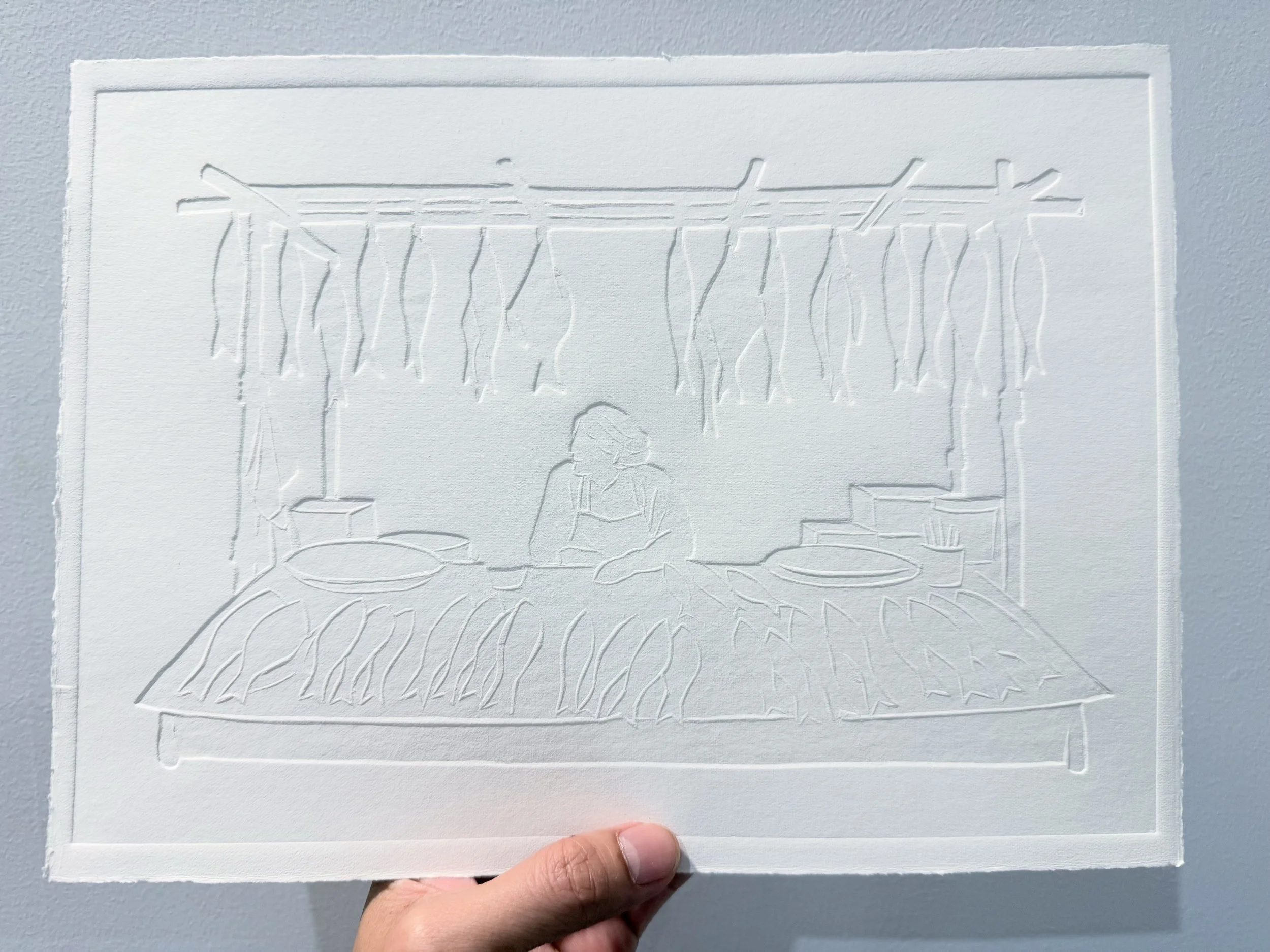
ក្រដាសបោះពុម្ពផុស ១៧ សន្លឹក (២១ សម x ២៩.៧ សម), ទឹកថ្នាំមានជាតិអាល់កុលនៅលើក្រដាស, សំឡេង
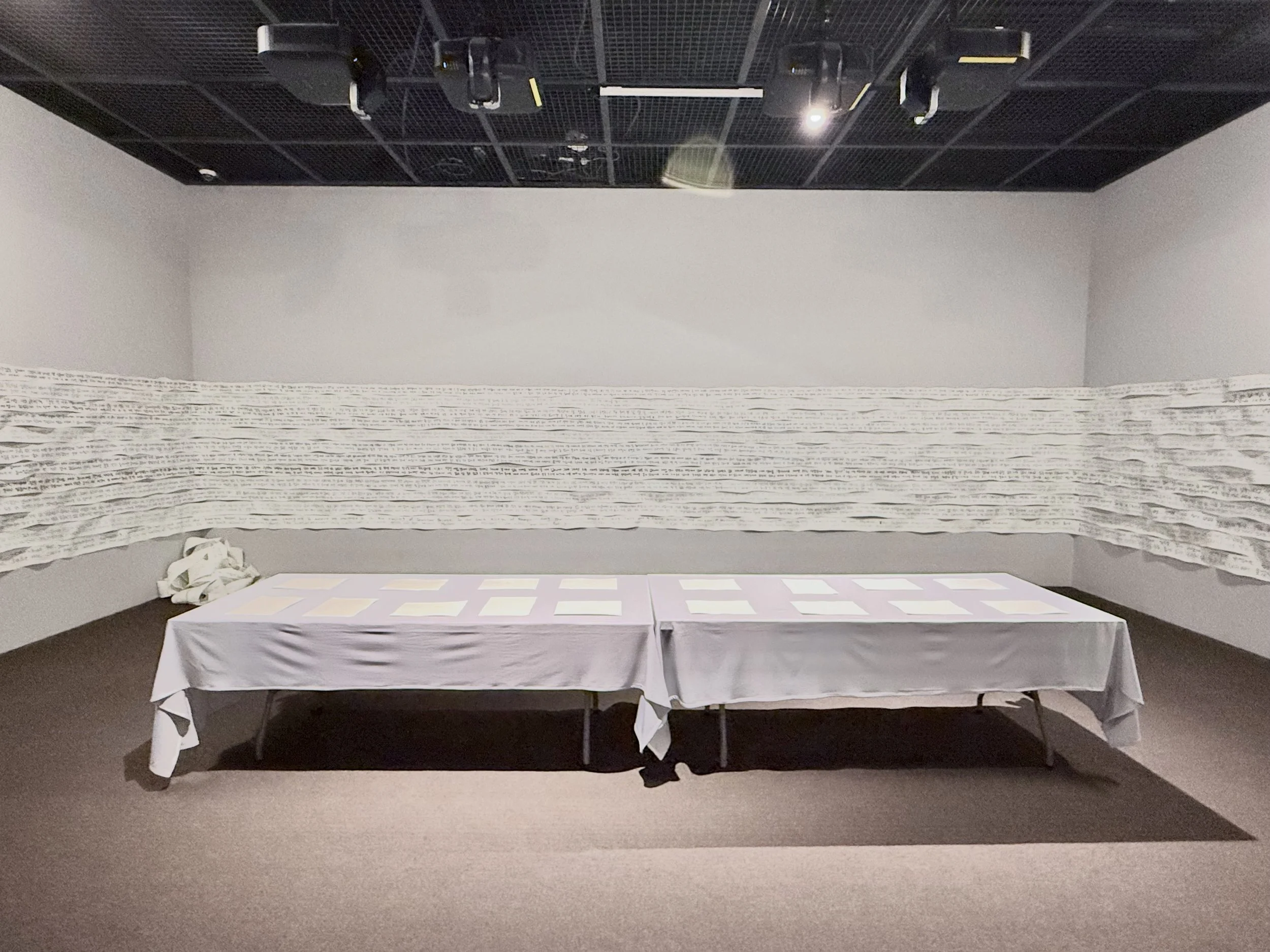
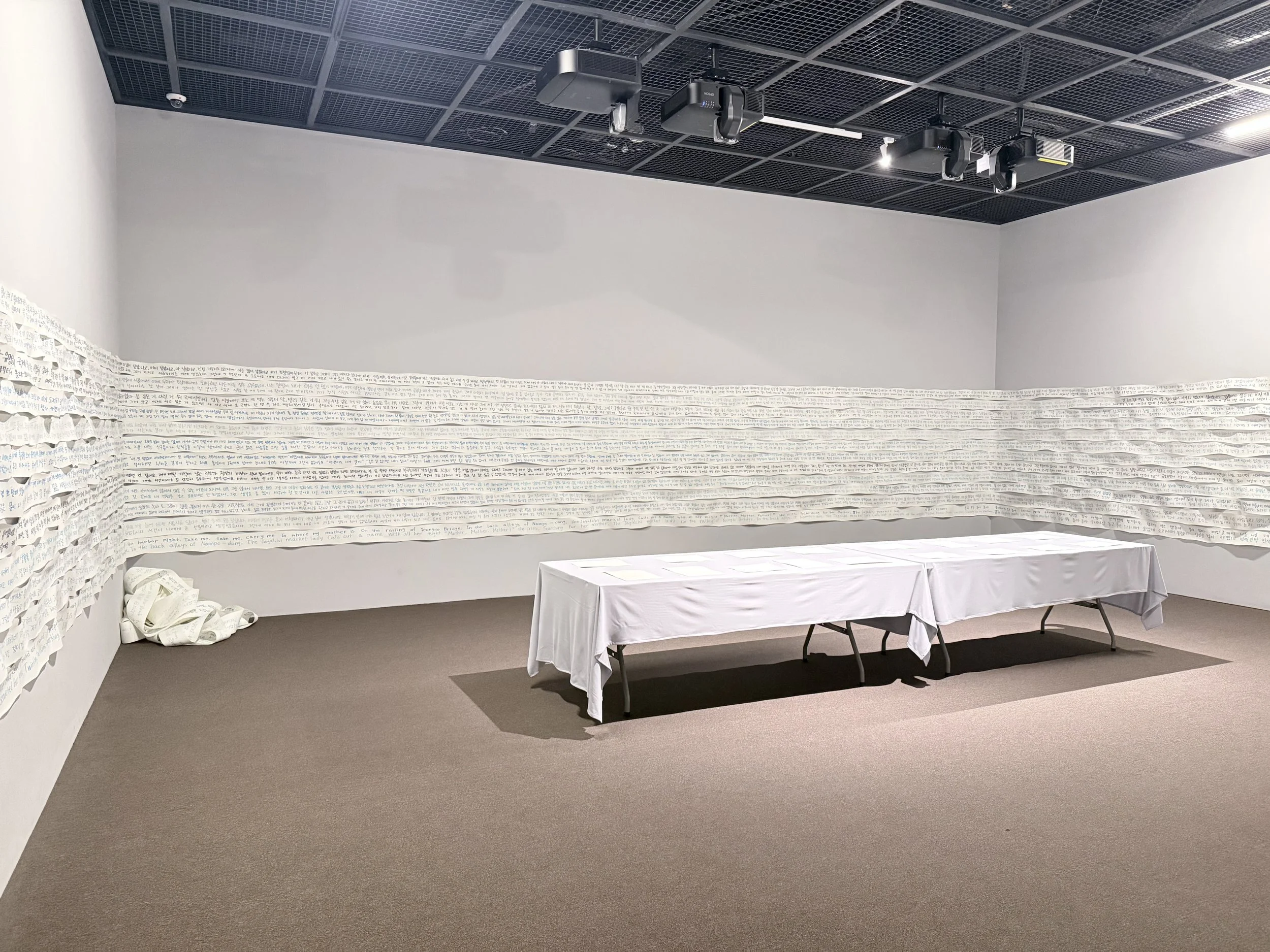
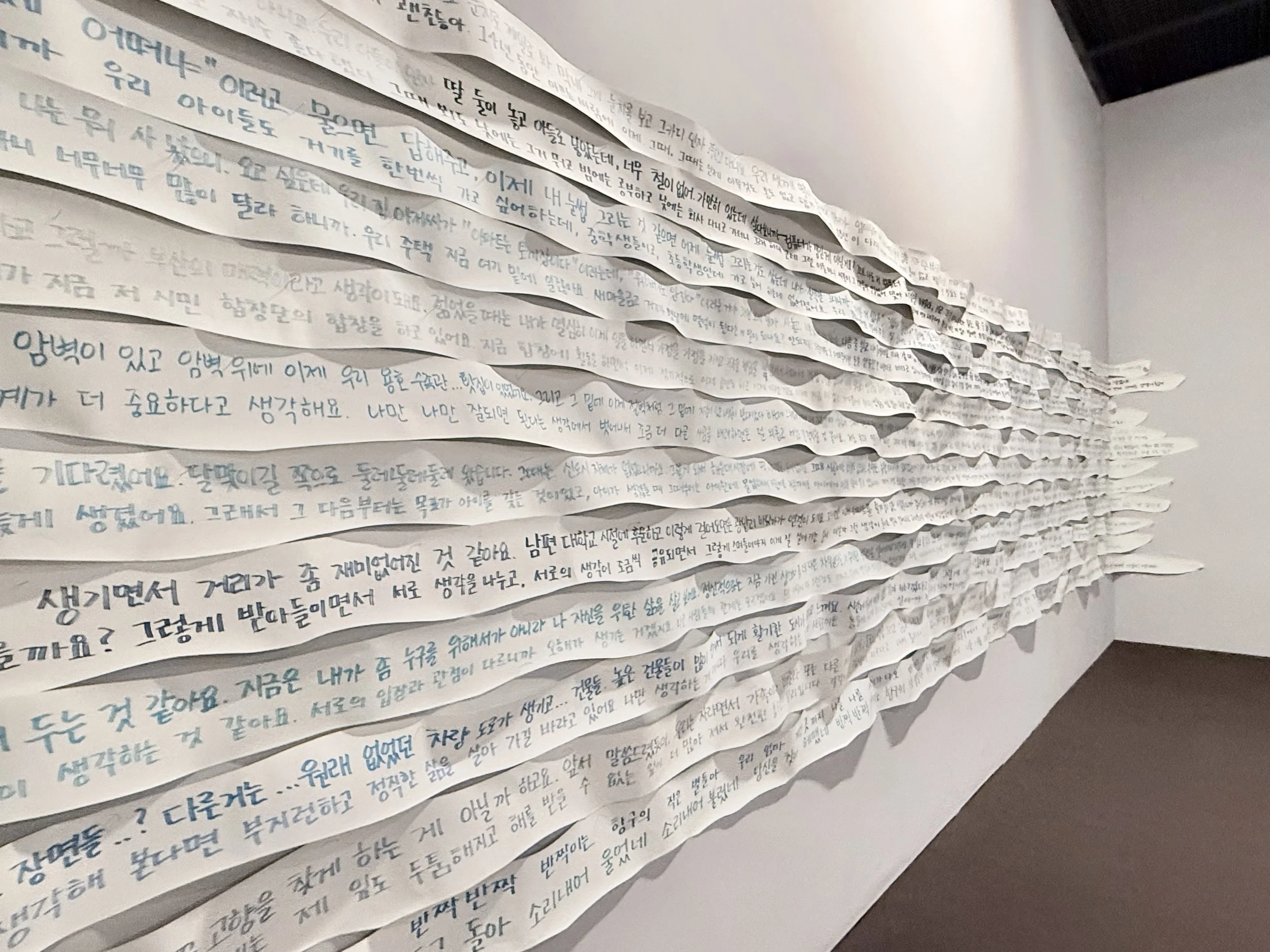
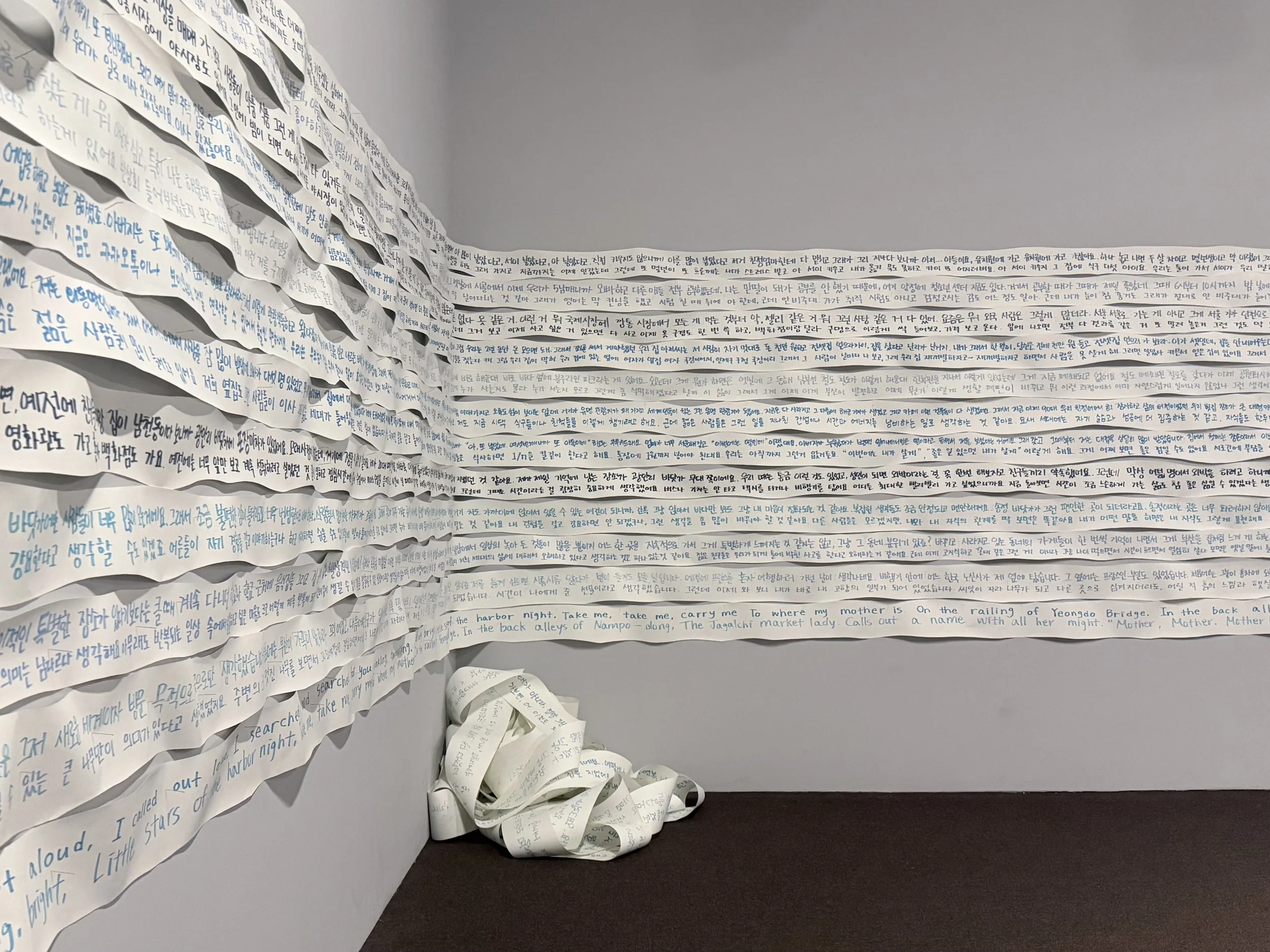
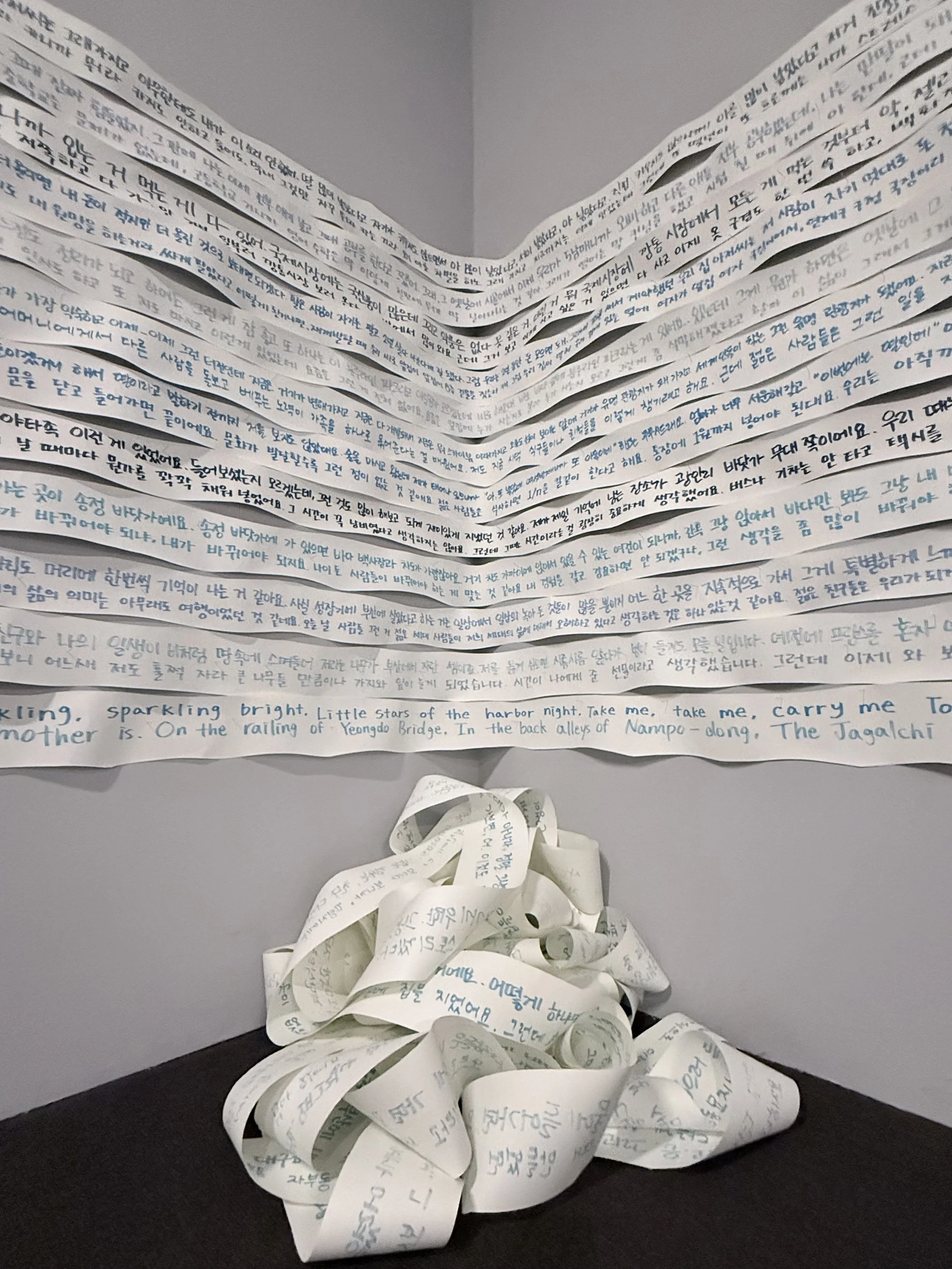
រូបភាពពិព័រណ៍នៅ ផ្ទះវប្បធម៌អាស៊ាន នៃមូលនិធិកូរ៉េ ទីក្រុងប៊ូសាន ២០២៦
ទីក្រុងប៊ូសាន កំពុងក្លាយជាទីក្រុងដែលមានប្រជាជនវ័យចំណាស់កាន់តែច្រើនខ្លាំង។ គិតត្រឹមខែសីហា ឆ្នាំ២០២៦នេះ ប្រមាណមួយភាគបួននៃប្រជាជនសរុប មានអាយុចាប់ពី ៦៥ ឆ្នាំឡើងទៅ។ ប៉ុន្តែនៅពីក្រោយភាសាអំពីភាពចាស់ជរា ការថែទាំ និងការបម្រែបម្រួលប្រជាសាស្ត្រ គឺមានអនុស្សាវរីយ៍ ចំណេះដឹង បំណងប្រាថ្នា និងក្តីសុបិនរបស់មនុស្សរាប់សិបម៉ឺននាក់ ដែលនៅមិនទាន់បានគេស្តាប់ឮ។
បន្ទប់ខ្សឹប ផ្តើមឡើងពីសំណួរដ៏សាមញ្ញមួយ៖ តើទីក្រុងនេះមិនទាន់បានរៀនស្តាប់អ្វីខ្លះពីមនុស្សចាស់ៗរបស់ខ្លួន?
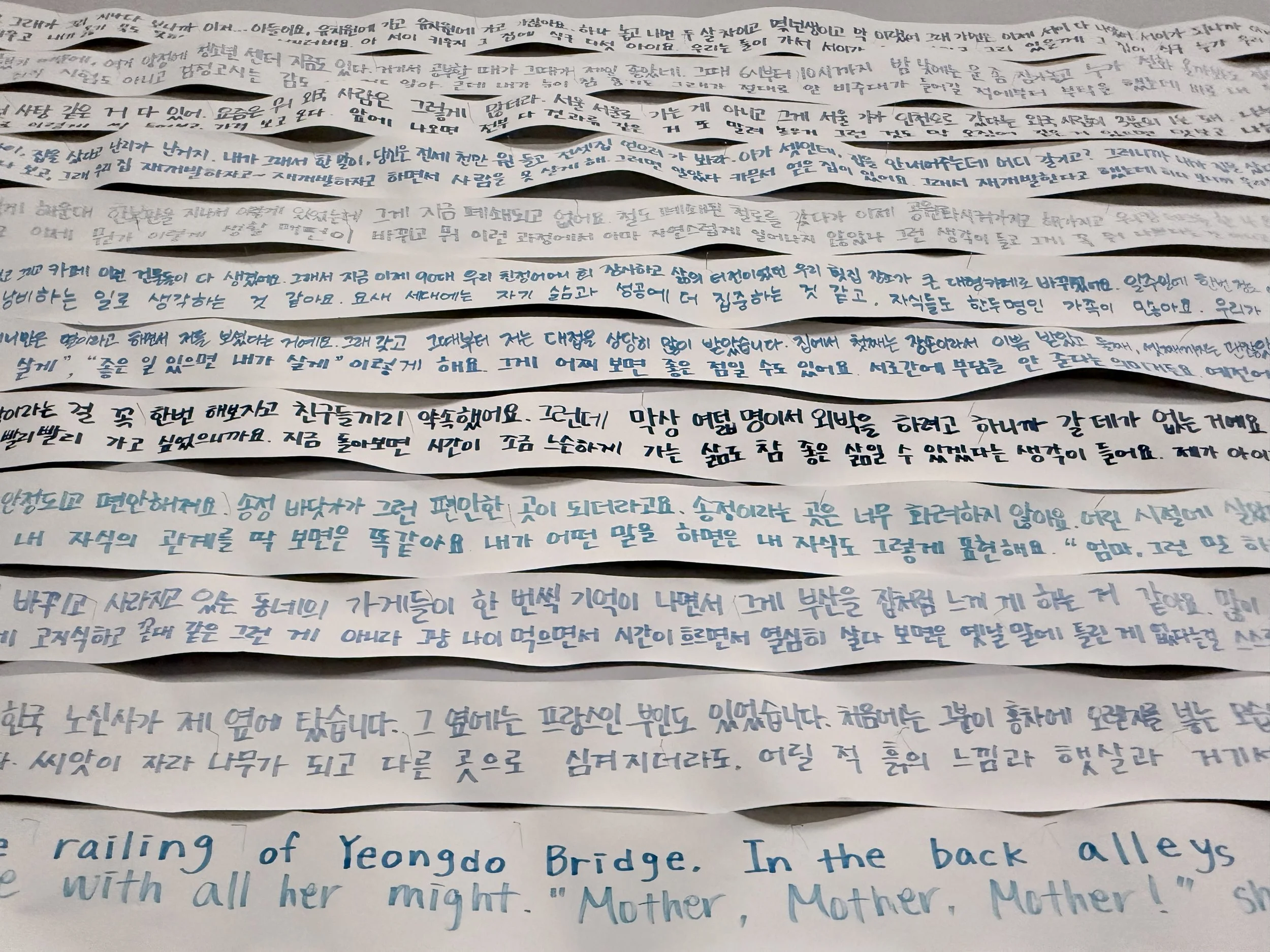
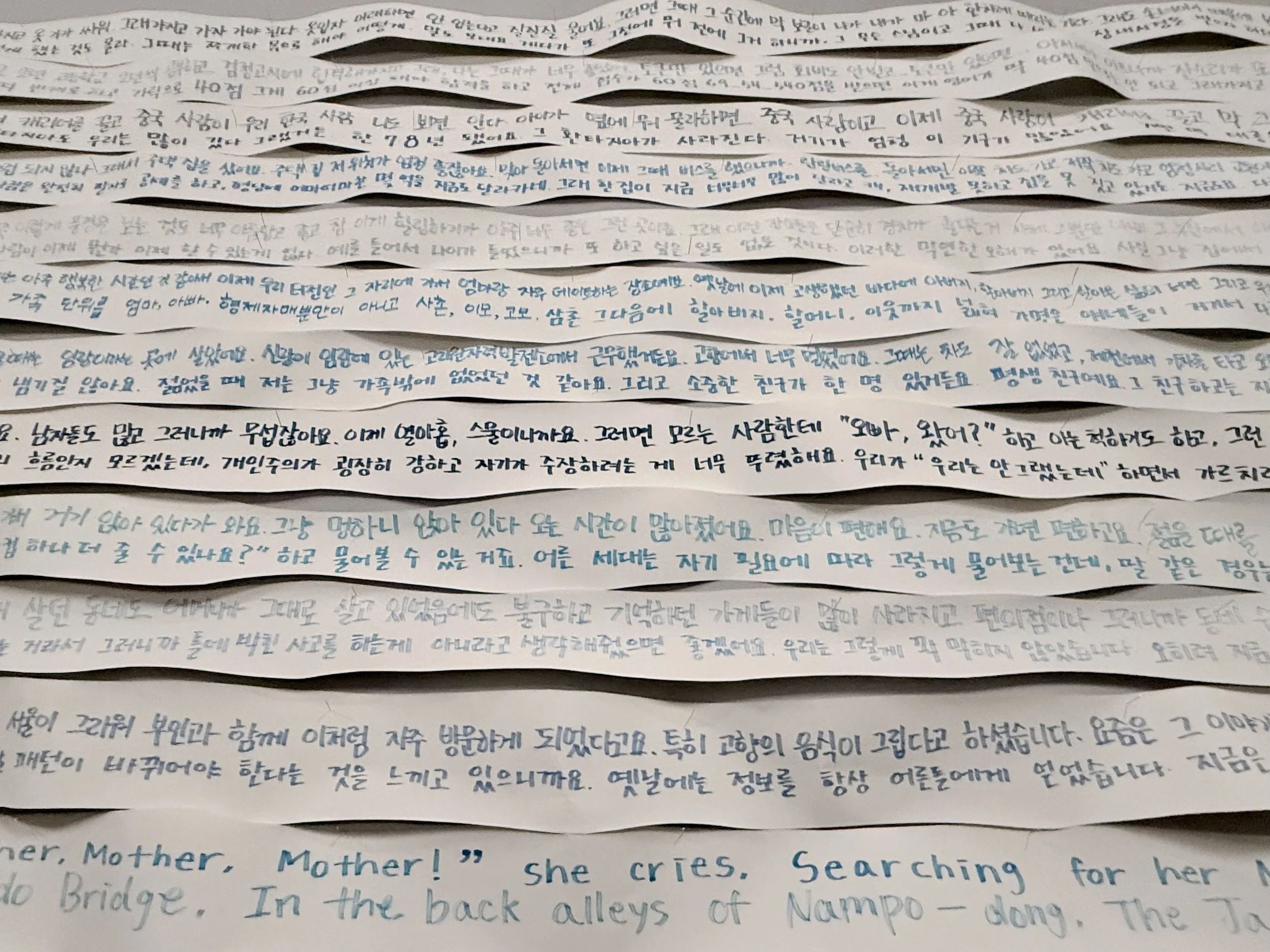
គម្រោងនេះ បានជួបជាមួយប្រជាជនចំនួន ១៧ នាក់មកពីតំបន់ផ្សេងៗក្នុងទីក្រុងប៊ូសាន ដែលភាគច្រើនមានអាយុលើសពី ៦០ ឆ្នាំ ដើម្បីចែករំលែកអនុស្សាវរីយ៍ផ្ទាល់ខ្លួន ទីកន្លែងដែលកំពុងបាត់បង់ សកម្មភាពប្រចាំថ្ងៃ និងបទពិសោធន៍ដែលបានបង្កើតអត្ថន័យនៃផ្ទះ គោលបំណងជីវិត អារម្មណ៍នៃភាពជាម្ចាស់កន្លែង ព្រមទាំងក្តីសង្ឃឹមសម្រាប់អនាគត។ តាមរយៈសន្ទនា រឿងរ៉ាវទាំងនេះត្រូវបានប្រែក្លាយទៅជាអត្ថបទសំណេរដៃនៅលើក្រដាសរមូរវែង និងសន្លឹកក្រដាសមានរូបបោះពុម្ពផុស។
កម្រងក្រដាសរមូរ ដែលហូរក្នុងទម្រង់ជារលកនៅលើជញ្ជាំង បង្កើតបានជារូបារម្មណ៍នៃសមុទ្រអនុស្សាវរីយ៍រួមគ្នាមួយ។ រឿងរ៉ាវនីមួយៗហូរប្រដេញគ្នា ហាក់ដូចជាទេសភាពទឹករលកនៃសមុទ្រប្រវត្តិជីវិតដ៏រស់រវើករបស់ទីក្រុងប៊ូសាន។ ចំណែកទីកន្លែង និងសកម្មភាពប្រចាំថ្ងៃដែលផ្សារភ្ជាប់ចំណងគ្រួសារ ទ្រទ្រង់សហគមន៍ និងផ្តល់អត្ថន័យដល់ជីវិតសាមញ្ញ បានលេចចេញជារូបភាពផុស ដែលវាមិនមែនគ្រាន់តែជារូបភាពនៃរឿងបុគ្គលម្នាក់ៗប៉ុណ្ណោះទេ ប៉ុន្តែជាមួយគ្នាវាជារូបភាពនៃទំនាក់ទំនងរវាងមនុស្ស និងទីកន្លែងដែលពួកគេរស់នៅ។
នៅក្នុង បន្ទប់ខ្សឹប អនុស្សាវរីយ៍ផ្ទាល់ខ្លួនត្រូវបានវេញបញ្ចូលគ្នា បង្កើតជាប្រវត្តិសាស្ត្រផ្ទាល់មាត់រួមមួយ ដែលរឿងរ៉ាវនីមួយៗត្រូវបានរក្សាទុកជាមួយគ្នា ប៉ុន្តែនៅតែមានលក្ខណៈដោយឡែករៀងៗខ្លួន។ រឿងរ៉ាវទាំងនេះធ្វើដំណើរឆ្លងកាត់អ្វីដែលបានចងចាំ អ្វីដែលបានផ្លាស់ប្តូរ និងអ្វីដែលនៅតែបន្តមានឥទ្ធិពលលើជីវិតក្នុងពេលបច្ចុប្បន្ន ដូចជារលកដែលនាំយកដាននៃអតីតកាលមកកាន់ពេលបច្ចុប្បន្ន។
គម្រោងនេះ មិនមែនជាការបង្ហាញភាពចាស់ជរាថាជាការធ្លាក់ចុះនៃជីវិត ឬជាការរំឭកស្រណោះអតីតកាលនោះទេ។ ផ្ទុយទៅវិញ វាចោទសួរថាតើអ្វីខ្លះនៅក្នុងទីក្រុងដែលផ្តល់អត្ថន័យដល់ជីវិតរបស់មនុស្សម្នាក់ៗ? តើអ្វីខ្លះដែលទ្រទ្រង់អារម្មណ៍នៃភាពជាម្ចាស់កន្លែងរបស់ពួកគេ? ហើយតើអ្វីខ្លះដែលនៅតែមានតម្លៃ ខណៈពេលដែលទីក្រុងកំពុងផ្លាស់ប្តូរ? គម្រោងនេះ ចាត់ទុកមនុស្សវ័យចំណាស់មិនមែនជាក្រុមប្រជាជនដែលត្រូវការការថែទាំនោះទេ ប៉ុន្តែជាអ្នកនិពន្ធនៃអនុស្សាវរីយ៍រស់រវើករបស់ទីក្រុង និងជាអ្នកចូលរួមក្នុងការស្រមៃគិតអំពីអនាគតរបស់ទីក្រុងរបស់គេ។
បន្ទប់ខ្សឹប គឺជាការអញ្ជើញឱ្យយើងស្តាប់ដោយយកចិត្តទុកដាក់នូវអ្វីដែលបានផ្លាស់ប្តូរ អ្វីដែលនៅតែបន្តមាន និងអ្វីដែលកំពុងរង់ចាំឱ្យមានអ្នកស្តាប់ឮ។
សេចក្តីថ្លែងអំណរគុណ៖
ស្នាដៃនេះត្រូវបានបង្កើតឡើងដោយផ្អែកលើរឿងរ៉ាវ និងសំឡេងរបស់ប្រជាជននៅទីក្រុងប៊ូសាន៖ Soon-ja Choi, Gwang-ok Jo, Jeom-gyo Lee, Jeong-suk Cha, Young-ja Lee, Bun-hyang Choi, Na-eun Ko, Bo-mi Jeon, Seok-sung Park, Myeong Chae, Seon-young Kim, Mi-kyung Park, Sook-hee Shin, Su-yoen Lee, Kyung-mi Choi, Pil-seok Heo និង Ik-bo Shim។
ស្នាដៃនេះត្រូវបានផលិតឡើងដោយមានការចូលរួមពី ជំនួយការរៀបចំពិព័រណ៍ Soohyun Kam និងនិស្សិតនៃសាកលវិទ្យាល័យ Kyonggi រួមមាន៖ Seo-hyung Kang, Su-min Eom, Sowun Yoon, Seung-hyeon Lee, Jea-ryeong Lee និង Tae-Young Lee។
The Whispering Room (2026)
by Vuth Lyno with residents of Busan
17 embossed prints (21 cm x 29.7 cm each), alcohol-based ink on paper scrolls, sound
Exhibition view, Korea Foundation’s ASEAN Culture House, Busan, 2026
Busan is becoming a super-aged city. As of August 2026, a quarter of its residents are aged 65 or older. Yet beneath the language of aging, care, and demographic change are thousands of lives whose memories, knowledge, desires, and unfinished dreams remain largely unheard.
The Whispering Room begins with a simple question: What has the city not yet learned to hear from its elders?
The project brings together 17 residents from across Busan, the majority aged over 60, to share personal memories, places that are disappearing, everyday activities, and experiences that have shaped their sense of home, purpose, and belonging, as well as their hopes for the future. Through conversations, fragments of these stories become handwritten texts on long paper scrolls and embossed prints.
Flowing across the walls in wave-like formations, the scrolls evoke a sea of collective memory. Individual stories ripple into one another, forming a seascape of Busan’s lived histories. Places and everyday activities that bind families, sustain communities, and give meaning to ordinary life come into view as embossed portraits—not of individuals alone, but of the relationships between people and the places they inhabit.
In The Whispering Room, personal recollections come together to form a collective oral history in which stories are held together yet remain distinct. They move between what is remembered, what has changed, and what continues to shape life in the present, like waves carrying traces of the past into the here and now.
The project is neither a portrait of aging as decline nor an exercise in nostalgia. Rather, it asks what has mattered in people's lives, what sustains their sense of belonging, and what remains meaningful as the city transforms. It positions older residents not as a population in need of care, but as authors of Busan’s living memory and participants in imagining its future.
The Whispering Room is an invitation to listen carefully—to what has changed, what remains, and what is still waiting to be heard.
Acknowledgment:
This work was created with the stories and voices of the following residents of Busan: Soon-ja Choi, Gwang-ok Jo, Jeom-gyo Lee, Jeong-suk Cha, Young-ja Lee, Bun-hyang Choi, Na-eun Ko, Bo-mi Jeon, Seok-sung Park, Myeong Chae, Seon-young Kim, Mi-kyung Park, Sook-hee Shin, Su-yoen Lee, Kyung-mi Choi, Pil-seok Heo, Ik-bo Shim.
This work was produced with the participation of Assistant Curator Soohyun Kam and students of Kyonggi University: Seo-hyung Kang, Su-min Eom, Sowun Yoon, Seung-hyeon Lee, Jea-ryeong Lee, and Tae-Young Lee.